What Is Chronic Pain? Understanding Spinal Decompression as a Treatment Option

You wake up with the same aching back you had yesterday. Sitting through a workday feels uncomfortable, lifting groceries takes extra effort, and even getting a good night's sleep has become difficult. You've tried resting, changing your chair, and taking breaks, but the pain keeps coming back.
When discomfort lasts for months, it's natural to wonder: What is chronic pain, and why won't it go away?
Chronic pain is pain that lasts or returns for more than three months. Unlike short-term pain, which often improves as an injury heals, chronic pain can persist even after clear signs of ongoing tissue damage are gone.
According to the Centers for Disease Control and Prevention (CDC), 24.3% of U.S. adults reported chronic pain in 2023. For some, it affects work, sleep, movement, and everyday activities.
The good news is that chronic pain can often be managed with the right combination of care. Understanding its causes is the first step. This guide explains common symptoms, why lower back pain sometimes becomes persistent, and where treatments such as chiropractic care and spinal decompression may fit into a recovery plan.
What Is Chronic Pain?
Chronic pain is ongoing or recurring discomfort that lasts longer than three months. It can affect almost any part of the body, including the back, neck, shoulders, joints, and muscles.
Pain usually serves as a warning. For example, when you strain a muscle, your nervous system sends signals that encourage you to protect the injured area while it heals.
With chronic pain, those signals may continue long after the initial injury. Sometimes, the nervous system becomes more sensitive, making ordinary movement or pressure feel more painful than before.
However, not all chronic pain develops this way. Some people have ongoing inflammation, nerve damage, or another medical condition that continues to produce pain.
Acute Pain vs. Chronic Pain
Acute pain | Chronic pain |
Usually lasts less than three months | Lasts or recurs for more than three months |
Often follows an injury or illness | May continue after healing or occur with an ongoing condition |
Usually improves as the cause resolves | May fluctuate or persist over time |
Often requires short-term care | May need a longer-term management plan |
What Is Chronic Pain Syndrome?
The term chronic pain syndrome is sometimes used when persistent pain affects several parts of a person's life, including sleep, mood, physical activity, and daily functioning.
It isn't a single diagnosis with one specific cause.
Chronic pain is also not imaginary. Changes in how the nervous system processes pain can occur alongside physical conditions, emotional stress, and other health concerns.
Effective care considers these factors together rather than focusing only on one painful area.
What Are the Different Types of Chronic Pain?
Not all chronic pain feels the same because different tissues and nervous system processes can be involved.
Healthcare professionals commonly describe several types of chronic pain.
Nociceptive pain: This develops when tissues such as muscles, joints, or ligaments send pain signals in response to injury or irritation. Arthritis and some muscle injuries are examples.
Neuropathic pain: This results from damage or disease affecting the nervous system. It may cause burning, shooting pain, tingling, or electric shock-like sensations.
Nociplastic pain: This involves changes in pain processing without clear evidence that ongoing tissue damage or a nerve lesion fully explains the symptoms. Fibromyalgia is one example.
Mixed pain: Some conditions involve more than one pain mechanism. A person with persistent lower back pain may experience both aching muscles and nerve-related leg pain.
Identifying the likely pain mechanism helps healthcare professionals select appropriate treatments.
What Does Chronic Pain Feel Like?
Chronic pain symptoms vary widely. Some people experience mild discomfort throughout the day, while others have severe pain that makes ordinary tasks difficult.
Common symptoms include:
A constant dull ache in the back, neck, or joints
Sharp or shooting pain during certain movements
Burning, tingling, or electric sensations
Muscle tightness and stiffness
Pain that travels into the arms, buttocks, or legs
Discomfort that interferes with sleep
Fatigue and difficulty concentrating
Pain may also change throughout the day.
For example, someone with chronic lower back pain might feel stiff in the morning, improve after walking, and experience discomfort again after sitting for several hours.
Another person may have pain that comes and goes without a predictable pattern.
How Chronic Pain Affects Everyday Life
Persistent pain can influence much more than physical comfort.
You may begin avoiding exercise because you're worried about making symptoms worse. Poor sleep can leave you exhausted, and simple activities may require more planning.
Over time, reduced activity can contribute to muscle weakness and lower physical fitness, making movement more difficult.
These effects are important parts of chronic pain treatment, not separate problems to ignore.
What Causes Chronic Pain?
There isn't always one clear answer to what causes chronic pain.
Some people develop persistent discomfort after an injury. Others experience pain associated with an ongoing health condition, nerve problems, or changes in how the nervous system responds to signals.
Common contributing factors include:
Previous Injuries
Car accidents, sports injuries, falls, and muscle strains can sometimes lead to ongoing discomfort.
Pain may persist because of an unresolved injury, reduced movement, or increased sensitivity within the nervous system.
Joint and Spinal Conditions
Arthritis, certain disc problems, and spinal stenosis may contribute to persistent pain.
However, age-related changes visible on an X-ray or MRI do not always explain symptoms. Many people have spinal degeneration without experiencing pain.
Nerve Problems
Conditions affecting nerves can cause burning, numbness, tingling, or shooting pain.
For example, irritation of a lumbar nerve root may produce pain that travels from the lower back into a leg.
Sleep, Stress, and Physical Activity
Poor sleep and ongoing stress can influence pain sensitivity. Long periods of inactivity may also reduce strength and movement tolerance.
These factors do not mean pain is psychological. They show why chronic pain often requires more than one treatment approach.
Chronic Lower Back Pain: Causes and Common Symptoms
Chronic lower back pain is discomfort in the lumbar region that lasts or returns for more than three months.
It can make sitting, standing, bending, walking, and lifting uncomfortable.
Although some cases involve identifiable spinal conditions, much chronic lower back pain is classified as nonspecific. This means no single structural problem fully explains the symptoms.
What Causes Chronic Lower Back Pain?
Possible causes and contributing conditions include:
Herniated or bulging discs: Spinal discs act as cushions between vertebrae. A herniated disc may irritate a nearby nerve, although many disc changes cause no symptoms.
Spinal stenosis: Narrowing around spinal nerves can contribute to leg pain, numbness, or weakness, particularly during standing or walking.
Facet joint arthritis: Changes in the small joints connecting the vertebrae may contribute to stiffness and discomfort.
Muscle and movement-related problems: Reduced strength, limited movement tolerance, or repeated physical strain may play a role in persistent symptoms.
Inflammatory conditions: Certain diseases, such as axial spondyloarthritis, can cause long-lasting back pain and require medical evaluation.
Why an Accurate Diagnosis Matters
Two people with similar lower back symptoms may need different treatment plans.
A healthcare professional may review your medical history, examine your movement and nerve function, and determine whether additional testing is necessary.
MRI scans are not automatically needed for every person with chronic lower back pain. Imaging is generally most useful when symptoms or examination findings suggest a condition that could change treatment decisions.
What Is Spinal Decompression Therapy?
What is spinal decompression? Spinal decompression therapy is a nonsurgical treatment that uses controlled pulling forces to gently stretch parts of the spine.
The treatment often involves motorized spinal traction performed on a specialized table.
During treatment, a patient typically lies on the table while a harness or support system helps position the body. The equipment applies a controlled pulling force to the spine.
Depending on the device, the force may remain steady or alternate between pulling and relaxing.
How Does Spinal Decompression Work?
The purpose of mechanical decompression is to temporarily reduce loading on certain spinal structures.
Some devices are designed to change pressure within spinal discs or reduce tension around irritated tissues.
However, an important distinction is necessary.
Although these mechanisms are often discussed in spinal decompression marketing, research has not established that routine nonsurgical decompression reliably pulls herniated discs back into place, repairs damaged discs, or restores normal disc function.
Any symptom improvement should be evaluated separately from claims about structural healing.
What Happens During a Session?
A typical mechanical traction session may involve:
Reviewing symptoms and confirming that treatment is appropriate
Positioning the patient on a specialized table
Applying controlled traction based on the equipment and clinical assessment
Monitoring comfort and symptoms throughout treatment
Reassessing the patient's response afterward
The treatment does not require an incision or general anesthesia.
Session duration and treatment frequency vary. There is no universally established number of sessions that guarantees improvement.
Does Spinal Decompression Work for Chronic Back Pain?
Spinal decompression may provide symptom relief for some individuals, but the scientific evidence does not support it as a consistently effective treatment for chronic lower back pain.
Research has examined several forms of traction, including motorized and intermittent traction. Results have been mixed, and many studies have limitations involving sample size, treatment methods, or comparison groups.
The World Health Organization's 2023 guideline recommends against using traction as part of routine care for adults with chronic primary lower back pain. This is a conditional recommendation based on very-low-certainty evidence.
That does not establish that every patient will have the same response. It does mean that decompression should not be presented as a proven first-line treatment.
When Might Spinal Decompression Be Considered?
A healthcare professional may discuss mechanical traction when evaluating certain spinal or nerve-related symptoms.
Before proceeding, the important questions are:
What condition is causing or contributing to the pain?
Is traction appropriate for that condition?
What benefits are realistic based on the available evidence?
What other treatments have stronger supporting research?
How will progress be measured?
For patients with chronic primary lower back pain, exercise-based care, education, and other guideline-supported treatments generally deserve priority.
Spinal decompression should not replace necessary medical evaluation or evidence-based rehabilitation.
Is Spinal Decompression Safe?
Nonsurgical spinal decompression avoids the risks associated with an operation, but that does not make it appropriate or risk-free for everyone.
Some patients may experience temporary soreness, increased discomfort, or muscle irritation during or after traction.
A healthcare professional should review medical history and relevant symptoms before recommending treatment.
Mechanical traction may be inappropriate for people with certain conditions, including:
Recent spinal fractures or significant instability
Severe osteoporosis
Spinal tumors or certain infections
Progressive neurological problems
Some postoperative spinal conditions
Pregnancy and implanted spinal hardware may also require special precautions or make particular techniques unsuitable.
The exact restrictions depend on the type of traction, the treatment area, and the patient's condition.
When Should You Seek Medical Attention?
Persistent pain should be assessed when it is worsening, interfering with daily activities, or accompanied by unexplained symptoms.
Seek emergency medical care for new bladder or bowel control problems, numbness around the groin or saddle area, or rapidly progressing leg weakness. These symptoms can indicate serious nerve compression.
A routine chiropractic appointment should not delay urgent medical care.
What Does a Chiropractor Do for Lower Back Pain?
Chiropractors assess and manage certain musculoskeletal problems, including lower back pain.
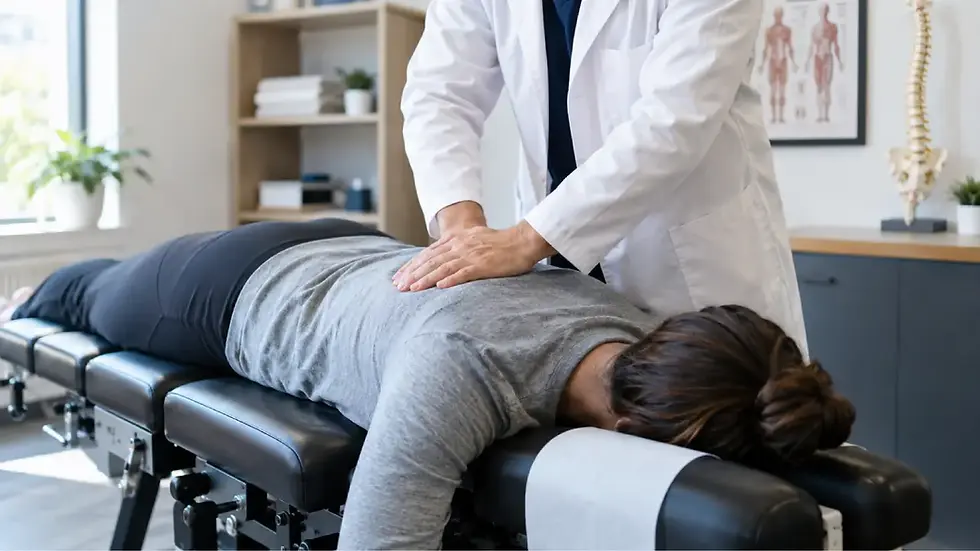
An initial evaluation may include discussing your symptoms, reviewing previous injuries, checking spinal movement, and performing relevant physical or neurological tests.
Depending on the findings, a chiropractor may recommend treatment, coordinate care with another healthcare professional, or suggest medical evaluation.
Chiropractic Adjustments
Spinal adjustments involve controlled movements applied to specific joints.
Research suggests spinal manipulation may produce modest improvements in pain and function for some people with chronic lower back pain.
The National Institutes of Health notes that spinal manipulation has potential benefits but can also cause temporary soreness or discomfort. Rare serious complications have been reported.
Movement and Lifestyle Guidance
Chiropractic care may also include advice about movement, posture, activity modification, and exercise, depending on the practitioner's services.
These strategies can help patients work toward practical goals such as walking comfortably, returning to exercise, or managing daily activities.
Treatment should be individualized, with progress measured through changes in pain, function, and quality of life.
Chronic Lower Back Pain Treatment: What Actually Helps?
If you're searching for how to get rid of chronic lower back pain, it's important to understand that there is no single treatment that works for everyone.
Some people recover substantially, while others need ongoing strategies to manage symptoms and maintain their quality of life.
The most effective approach depends on the cause of pain, overall health, and individual goals.
Stay Active Within Your Limits
Prolonged bed rest is generally not recommended for chronic lower back pain.
Walking, swimming, and other tolerable activities can help maintain movement and physical fitness.
Start at a manageable level and gradually increase activity rather than pushing through severe symptoms.
Follow an Appropriate Exercise Program
Exercise is among the commonly recommended treatments for chronic primary lower back pain.
A suitable program may include strengthening, mobility work, and gradual return to normal activities.
The WHO supports structured exercise as part of chronic lower back pain management, although no single exercise method is best for everyone.
Consider Physical and Psychological Therapies
Physical therapy can help improve strength, mobility, and confidence with movement.
For some patients, cognitive behavioral therapy or other psychological approaches can help reduce pain-related distress and improve daily functioning.
These approaches address how people respond to persistent pain; they do not imply that the pain is imaginary.
Discuss Medication When Appropriate
Certain medications, including nonsteroidal anti-inflammatory drugs, may be considered when suitable for the patient.
However, medications have potential side effects and are not appropriate for everyone.
Long-term opioid treatment is generally discouraged for chronic primary lower back pain because of limited long-term benefits and significant risks.
Build Sustainable Daily Habits
Small changes may help support a broader treatment plan.
Consider taking regular movement breaks, maintaining a consistent sleep schedule, gradually rebuilding strength, and modifying activities that repeatedly aggravate symptoms.
The goal is not perfect posture or avoiding every uncomfortable movement. It is developing the strength, confidence, and tolerance needed for everyday life.
Chiropractic Care for Chronic Back Pain in Chesterfield, VA
Living with ongoing back or neck pain can make even simple activities feel challenging. If your symptoms have continued for several months, understanding the possible causes and available treatment options is an important first step.
At Taylor Chiropractic Clinic, patients in Chesterfield, VA, can discuss their musculoskeletal concerns and explore available chiropractic services.
The clinic offers:
Chiropractic Adjustments: Hands-on treatment intended to support joint movement and help manage certain musculoskeletal symptoms.
Spinal Decompression Therapy: Nonsurgical mechanical traction that may be discussed for selected spinal concerns after appropriate screening.
Neuropathy Care: Assessment and available care options for certain nerve-related concerns.
Not every patient with chronic pain needs spinal decompression or chiropractic adjustments. The appropriate next step depends on your symptoms, medical history, examination findings, and treatment goals.
If persistent back discomfort is affecting your daily life, contact Taylor Chiropractic Clinic to discuss whether a chiropractic evaluation may be appropriate.
Location: Chesterfield, VA
Website: Chiropractor in Chesterfield, VA
Phone: +1 804-526-1792
Living Better With Chronic Pain
Chronic pain can change how you work, move, sleep, and spend time with the people you care about. But persistent discomfort does not necessarily mean that improvement is impossible.
Understanding what is chronic pain, identifying possible causes, and choosing appropriate treatment options can help you make informed decisions about your health.
For chronic lower back pain, an effective approach often combines education, movement, exercise, and individualized healthcare support. Chiropractic treatment may have a role for some patients, while spinal decompression requires careful consideration because its benefits remain uncertain.
If ongoing back or neck pain is affecting your daily routine, Taylor Chiropractic Clinic in Chesterfield, VA, offers chiropractic care and spinal decompression therapy for patients seeking to explore their treatment options.
Book an appointment today with Taylor Chiropractic Clinic to discuss your symptoms, explore appropriate care options, and take the next step toward better movement and daily comfort.
Frequently Asked Questions
Can Spinal Decompression Help Relieve Chronic Back Pain?
Spinal decompression may provide relief for some people, but research does not establish consistent benefits for chronic lower back pain. Current guidelines advise against routine traction for chronic primary lower back pain. A professional evaluation can help determine whether the treatment is appropriate for a particular spinal condition.
What Causes Chronic Neck Pain?
Chronic neck pain can be associated with muscle strain, arthritis, previous injuries, certain disc conditions, and other musculoskeletal problems. Sometimes no single cause can be identified. Treatment depends on the diagnosis and may include exercise, physical therapy, appropriate manual treatments, and activity modification.
Is Spinal Decompression Safe for Chronic Back Pain?
Mechanical spinal decompression may be tolerated by appropriately screened patients, but it can cause discomfort and is unsuitable for certain spinal conditions. A healthcare professional should review relevant medical history and potential contraindications before treatment.
Can Chiropractic Care Help Manage Chronic Lower Back Pain?
Spinal manipulation may provide modest improvements in pain and function for some adults with chronic lower back pain. It is generally best considered alongside other appropriate treatments, particularly exercise, education, and self-management strategies. Results vary between patients.
How Long Does Chronic Lower Back Pain Last?
Chronic lower back pain lasts or recurs for more than three months, but its future course varies. Some people improve substantially with appropriate care, while others experience recurring symptoms. Identifying contributing factors and maintaining a realistic treatment plan can help improve function and quality of life.


Comments